 By Admin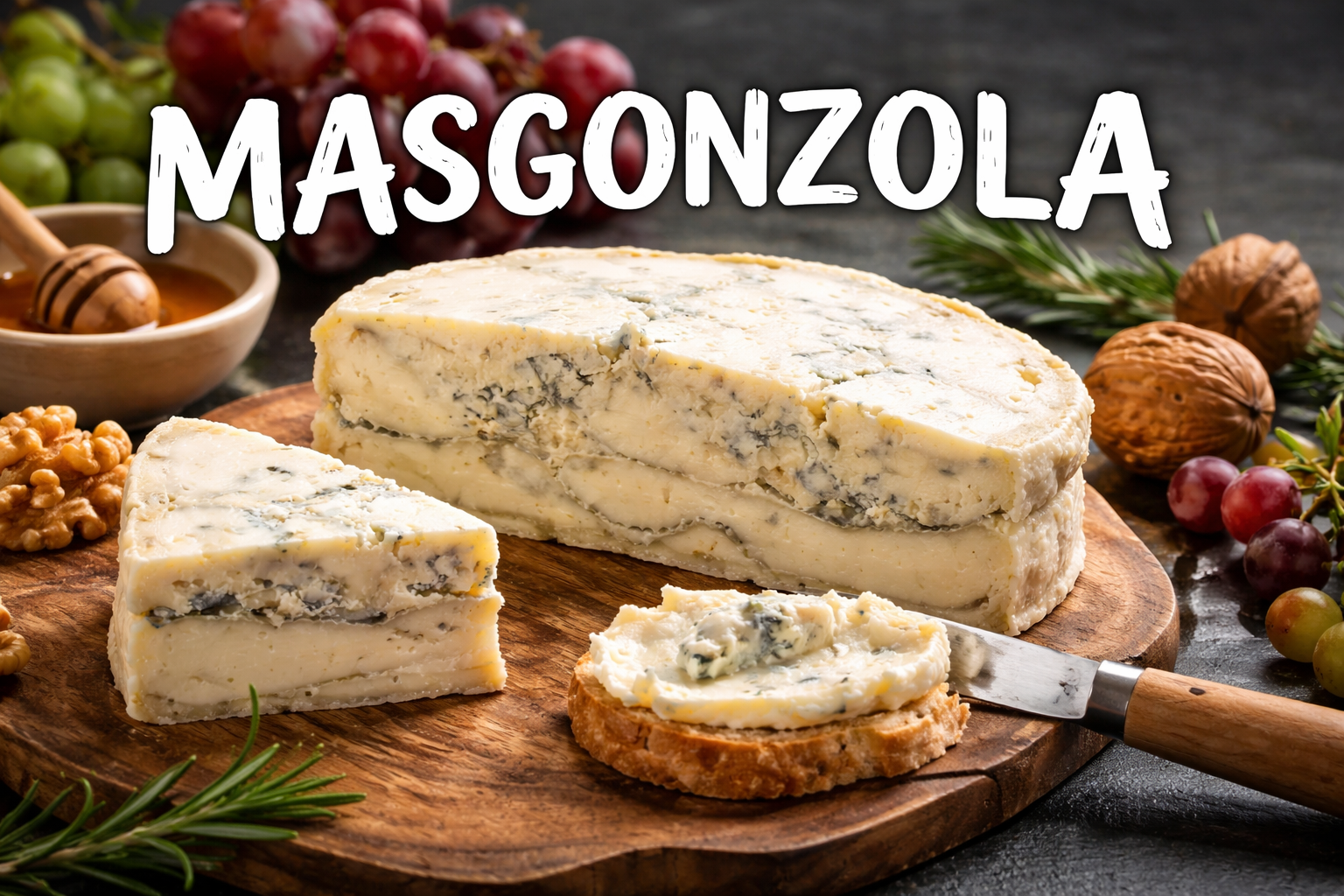
Ever come across a word and feel like… this has to be food?
That’s masgonzola.
At first, it sounds like a typo of gorgonzola. Or maybe some fancy Italian cheese you forgot to try. But then you dig a little deeper—and things get interesting. Because masgonzola isn’t just a cheese… it’s kind of a concept too.
Let’s talk about it properly.
What Is Masgonzola, Really?
So here’s the simple version:
Masgonzola is a fusion cheese made by combining mascarpone and gorgonzola.
Yeah. That’s it. But also… not just that.
It blends:
- The rich, creamy softness of mascarpone
- With the slightly sharp, blue-veined flavor of gorgonzola
And the result?
Something smoother. Milder. Way more approachable than traditional blue cheese.
A Quick Snapshot (So You Get It Fast)
| Feature | Masgonzola Description |
|---|---|
| Type | Soft / semi-soft fusion cheese |
| Main Ingredients | Mascarpone + Gorgonzola |
| Texture | Creamy, spreadable, silky |
| Taste | Mild blue tang + slight sweetness |
| Origin | Modern, inspired by Italian cheesemaking |
| Availability | Not standardized, often artisanal |
The Story Behind Masgonzola (It’s Not That Old…)
Here’s where things get a bit unexpected.
Masgonzola isn’t like parmesan or mozzarella with centuries of history. It’s actually a modern creation, born from experimentation.
Cheesemakers basically thought:
“What if blue cheese… but less aggressive?”
And so they started blending techniques, textures, and flavors. The goal? Balance.
- Not too sharp
- Not too plain
- Not too heavy
And honestly… they nailed it.
What Does Masgonzola Taste Like?
This part matters. Because blue cheese can be… intimidating.
Masgonzola? Not really.
Here’s how people usually describe it:
- First bite: buttery, creamy, almost sweet
- Then: a gentle blue cheese tang (not overpowering)
- Aftertaste: smooth, slightly earthy, a little nutty
It doesn’t punch you in the face like strong blue cheese. It just kind of… sits nicely on your tongue.
And lingers.
Why People Are Starting to Like It
There’s a reason masgonzola is slowly gaining attention in food circles.
Actually, a few reasons:
- It’s beginner-friendly (great if you don’t like strong cheeses)
- It’s super versatile in cooking
- It feels gourmet without being complicated
- And yeah… it’s a bit unique, which people love
Also—let’s be real—food trends matter. And hybrid foods? They’re everywhere now.
How Masgonzola Is Made (Simple Version)
No need to overcomplicate this.
At its core, the process involves:
- Blending or layering mascarpone and gorgonzola
- Allowing mold cultures (like Penicillium) to develop subtle veining
- Controlling texture so it stays soft and spreadable
Some versions are layered, giving that marbled look. Others are mixed more evenly.
And since it’s not a protected cheese (like PDO cheeses), producers can experiment a lot.
How You Can Use Masgonzola (This Is the Fun Part)
This cheese isn’t just for fancy cheese boards. It’s actually really flexible.
Here are some ideas:
Everyday Uses
- Spread on toast or crackers
- Add to sandwiches or burgers
- Mix into mashed potatoes
Cooking Ideas
- Creamy pasta sauces
- Stuffed chicken breast
- Pizza topping (seriously… try it)
Fancy-ish Stuff
- Pair with honey and nuts
- Add to salads with fruits
- Use in desserts (yep, sweet + savory works here)
Masgonzola vs Gorgonzola (Quick Comparison)
| Feature | Masgonzola | Gorgonzola |
|---|---|---|
| Flavor | Mild, balanced | Strong, tangy |
| Texture | Creamy, smooth | Crumbly or creamy |
| Intensity | Light to medium | Medium to strong |
| Beginner-friendly | Yes | Not always |
So yeah—if gorgonzola feels “too much,” masgonzola is like its chill cousin.
Is Masgonzola a “Real” Cheese?
This question comes up a lot.
Short answer: Yes… but not officially standardized.
It’s not protected by traditional European labeling systems.
So:
- There’s no single “authentic” version
- Different producers make it differently
- It’s more of a style than a strict category
And honestly… that freedom is what makes it interesting.
A Few Things to Keep in Mind
Before you go hunting for it:
- It might not be available everywhere
- You may find it under different names or variations
- Quality can vary depending on who makes it
But if you see it? Worth trying.
Final Thoughts (Okay… Almost)
Masgonzola feels like one of those foods that sits between worlds.
Not fully traditional. Not completely new either.
It takes something bold (blue cheese)… softens it… blends it… and turns it into something more approachable. And that’s probably why people are curious about it.
And maybe that’s the whole point.
Food evolves. Just like language. Just like trends.
Masgonzola is part of that evolution.
Want to read more like this? Check out smoothiepussit for more interesting articles.