 By Admin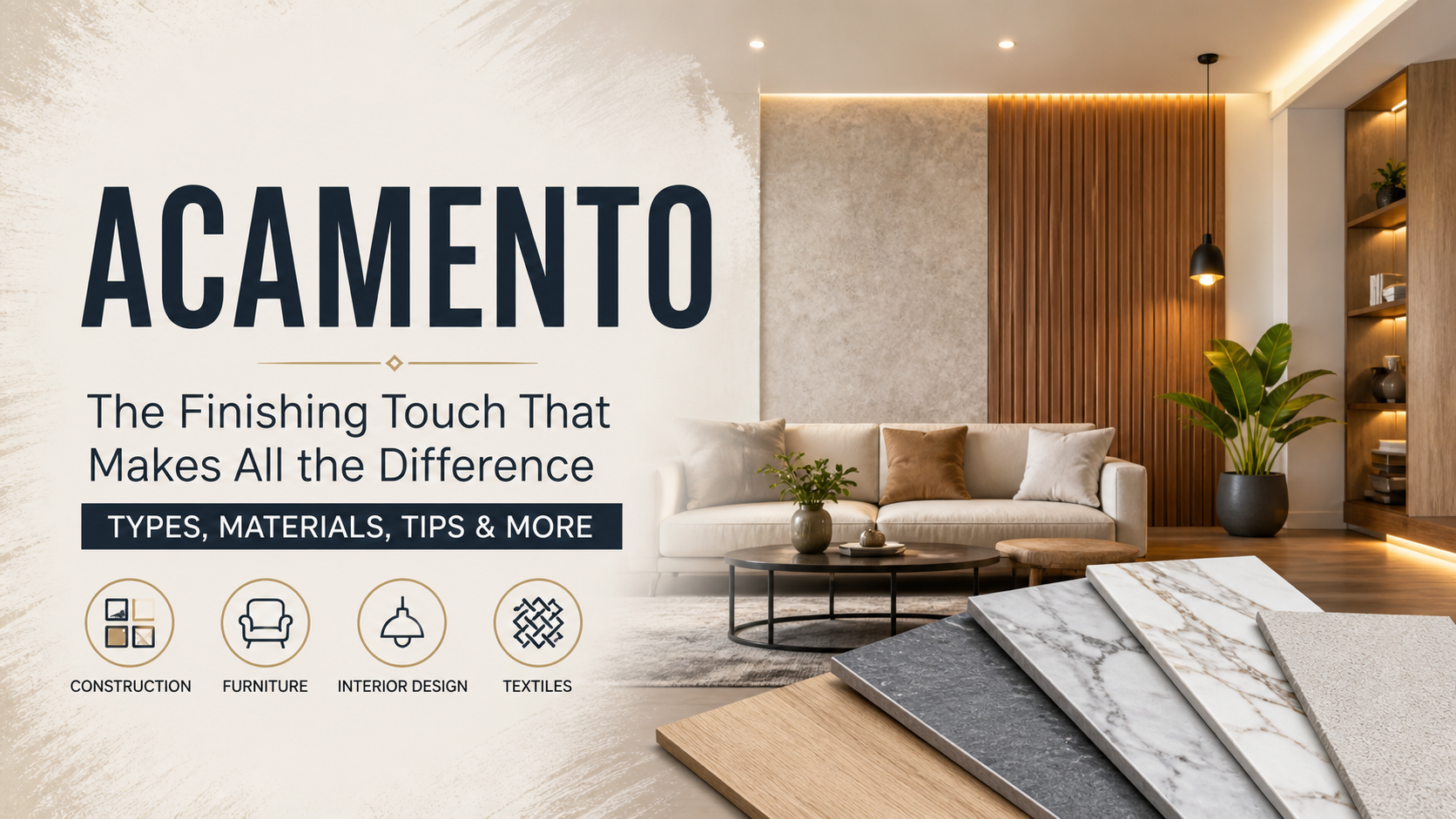
You’ve probably come across the word “Acamento” somewhere online… and paused.
Wait—is it a typo? A new term? Something technical?
Well… yeah, kind of both.
Because in most real-world usage, “Acamento” is actually a misspelling or variation of “Acabamento.” And that word? It’s surprisingly important—especially in construction, design, furniture, and even fashion.
Let’s unpack it slowly… no rush.
So, What Is “Acamento” (or Acabamento)?
At its core, Acabamento refers to the final stage of a product or project—the finishing touches.
Not the raw structure. Not the base materials. But the part people actually see and feel.
According to industry definitions, it’s the process that gives a product its final appearance, texture, and overall appeal
Think about it like this:
- You build a house → that’s structure
- You paint, tile, polish → that’s acabamento
Simple… but also not so simple.
Because sometimes, those “small details” are everything.
Why Acamento Actually Matters
Here’s the thing people underestimate: finishing isn’t just decoration.
It’s value, durability, and experience rolled into one.
A rough wall vs a polished one…
A plain table vs a varnished one…
Same base—but completely different feel.
And honestly, buyers notice.
Key reasons why it matters:
- Visual appeal – First impressions? Always about the finish
- Protection – Paints, coatings, laminates protect surfaces
- Durability – Proper finishing extends lifespan
- Market value – Better finish = higher perceived worth
- Comfort – Smooth surfaces, clean edges… just nicer to live with
And yeah… sometimes it’s the difference between “meh” and “wow.”
Types of Acamento (Across Different Fields)
This is where it gets interesting. The concept isn’t limited to just construction—it shows up almost everywhere.
1. Construction & Interior Design
This is the most common use.
In buildings, acabamento includes:
- Flooring (tiles, wood, marble)
- Wall finishes (paint, wallpaper)
- Ceilings (false ceilings, textures)
- Fixtures (lighting, fittings)
Even small elements like rodapés (baseboards), cantoneiras (corner trims), and soleiras (thresholds) play a role in finishing details
And yeah… skip those, and the whole place feels incomplete.
2. Furniture Finishing
Furniture without finishing? Feels raw.
Common finishes include:
- Varnish
- Laminate
- Paint coating
- Polish
These not only improve looks but also protect against moisture, scratches, and wear.
3. Textile & Fashion
Yep, even clothes have acabamento.
- Stitching edges
- Fabric treatments
- Surface textures
That smooth seam on your shirt? That’s finishing work.
4. Printing & Publishing
Books, packaging, magazines—all use finishing techniques like:
- Gloss or matte coating
- Binding
- Embossing
It’s what turns printed paper into a premium product.
Common Types of Finishing (With Examples)
Let’s break it down a bit more practically:
| Type of Finish | Where It’s Used | Purpose |
|---|---|---|
| Polished | Floors, stones | Smooth, shiny surface |
| Matte | Walls, furniture | Soft, non-reflective look |
| Laminated | Furniture, flooring | Protection + style |
| Painted | Walls, metal | Color + protection |
| Textured | Walls, décor | Adds depth and design |
Not every project needs a glossy finish.
Sometimes matte just feels… right.
Materials Used in Acamento
Finishing depends heavily on materials—and there are many.
Some popular ones include:
- Ceramic tiles
- Porcelain
- Wood laminates
- Glass panels
- Paints and coatings
- Natural stone (marble, granite)
Each material creates a different vibe.
And yeah… budget matters here too.
Smooth vs Rough Finishes (A Quick Comparison)
This is where design choices really show.
| Feature | Smooth Finish | Rough Finish |
|---|---|---|
| Look | Clean, modern | Rustic, natural |
| Maintenance | Easy to clean | Slightly harder |
| Grip | Slippery sometimes | Better traction |
| Use | Interiors | Outdoors, pathways |
Neither is “better”… just different.
How to Choose the Right Acamento
Honestly, this part confuses people the most.
Because there’s no single “best” option.
It depends on:
- Budget – Some finishes are expensive
- Usage – High-traffic areas need durable materials
- Style – Modern vs traditional
- Maintenance – Glossy looks great… but shows dirt
And sometimes, you just go with what feels right.
Small Details That Make a Big Difference
Here’s something people overlook—
Tiny finishing elements can completely transform a space.
Like:
- Edge trims
- Door frames
- Window finishes
- Lighting fixtures
Individually? Not a big deal.
Together? Huge impact.
Common Mistakes to Avoid
Let’s be real—finishing is where many projects go wrong.
Some common issues:
- Rushing the final stage
- Choosing cheap materials
- Ignoring durability
- Overdesigning (too many textures… messy look)
- Poor installation
And yeah… fixing mistakes later costs more.
Final Thoughts (Not Too Formal, Promise)
So… “Acamento” might just be a spelling variation.
But the idea behind it? Very real.
It’s that last layer. The final touch. The detail people don’t always notice consciously—but feel immediately.
And honestly…
A project without proper finishing feels incomplete. Like a sentence that just… stops.
Not great.
If you’re working on anything—home, furniture, even content—don’t ignore the finishing stage.
It’s where everything comes together.
Or falls apart.