 By Admin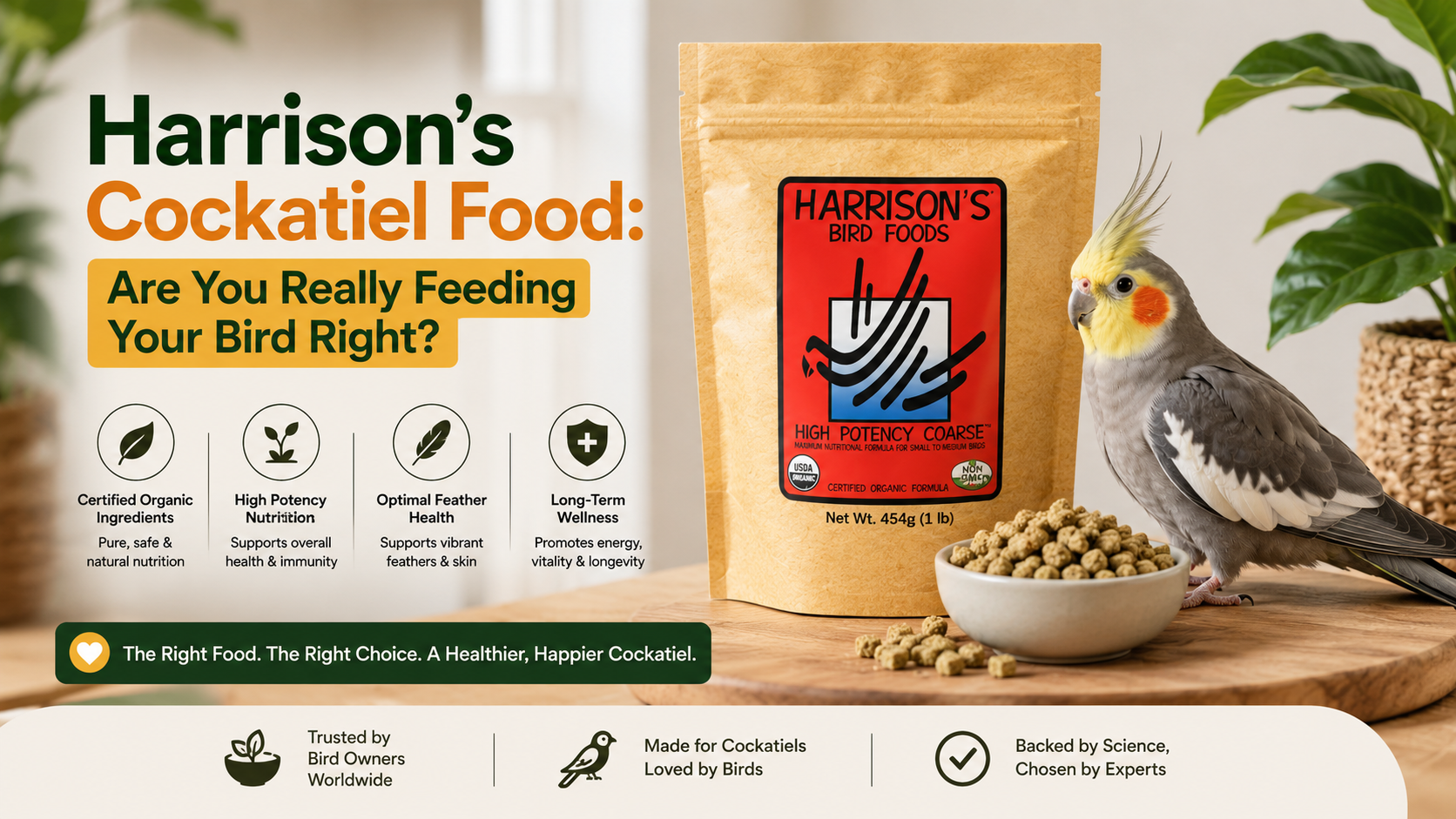
Many people keep birds and truly love them. They talk to their cockatiel as if it were a member of their family, cleaned the cage every other day, and changed the water twice. However, when you ask them what their bird ate today, they virtually invariably say the same seeds. Maybe a treat here and there. The thing is, most bird owners have no idea that this is exactly where they’re going wrong. If you want your cockatiel to actually be healthy, not just alive, then understanding what goes into Harrison’s cockatiel food is something you really need to know.
Seeds feel natural. They look like what birds eat in the wild. But pet cockatiels are not wild birds, and seeds alone leave massive gaps in their nutrition. Too much fat, not enough vitamins, missing amino acids, very little in the way of minerals that support organ function and feather growth. A cockatiel eating only seeds can look perfectly fine for months. Then, slowly, you start to notice the feathers aren’t as bright. The bird seems tired or irritable. Some birds start plucking themselves. Avian vets see this constantly, and the first thing they change is always the food.
Why Harrison’s Cockatiel Food Stands Apart
Harrison’s was created by avian veterinarians, not a pet food marketing team. That matters more than people realize. Every formula was designed around what companion birds actually need, studied over decades of feeding and breeding trials. Harrison’s organic cockatiel food is certified organic, non-GMO, and made without artificial colors, chemical preservatives, or synthetic fillers. The nutritional profile is precise: 14% protein, 5.5% fat, with a carefully balanced ratio of Omega-3 and Omega-6 fatty acids. Nothing random about it.
There are two formulas to know. The High Potency formula is where every bird starts, especially those switching from a seed diet, going through a molt, recovering from illness, or in a breeding cycle. Birds should stay on this one for at least six months. After that, the Adult Lifetime formula takes over for daily maintenance. Clean, consistent nutrition without anything unnecessary.
What Owners Actually Notice After Switching
This is where it gets interesting. People who move their cockatiels to Harrison’s organic cockatiel food start seeing real changes within a few weeks. Feathers come in fuller and shinier. Energy goes up noticeably. Birds that used to seem anxious or restless settle down. Some owners who had been dealing with feather-plucking for months watch it slow down and eventually stop once the bird’s nutritional needs are genuinely being met. One owner shared that her cockatiel lived to 31 years old, and she attributed this to the food. Whether or not every bird hits that number, consistent good nutrition clearly adds real years to a bird’s life.
Harrison’s Cockatiel Food and the Bigger Picture at Birdie Boutique
Not every home has just one small bird. Your larger parrot, African grey, macaw, cockatoo, or Amazon, all have different demands and should receive the same level of care. The best parrot food pellets can help with that.
TOPS parrot foods are USDA Organic-certified and made utilizing a cold-press method that removes heat. The vitamins and natural enzymes that give food its actual nutritional value are destroyed by heat, which makes this crucial. Producers are forced to reintroduce synthetic nutrients because most other pellets on the market are baked or extruded. TOPS skips all of that. Organic alfalfa, millet, barley, quinoa, pumpkin, sesame seeds, rose hips, spinach leaf powder, dandelion, carrot powder, and cinnamon make up the ingredient list, which seems to come from a health food store. No artificial ingredients, no added sugar, no soy, no BHA, and no BHT. Birdie Boutique offers both options, so you do not need to search far and wide to find what your bird needs.
Making the Switch to Tops Parrot Food Pellets Without the Stress
When it comes to new food, birds are obstinate. You should not expect your cockatiel to jump right into pellets after three years of eating seeds. Start by offering both. Keep the seeds, but add the pellets alongside. Let the bird get curious at their own pace. Most cockatiels come around within a few weeks. Tops Parrot Food Pellets actually help with picky, larger birds, too, because the natural ingredients give them a warm, slightly herby smell that birds find interesting rather than suspicious.
The switch takes patience. That is the only hard part. The nutrition does everything else on its own.
One Last Thing Worth Saying
Birds hide illness well. By the time something looks wrong, it has often been building for a while. The best thing any bird owner can do is close the nutritional gaps before problems ever start. Harrison’s cockatiel food exists for exactly that reason. It was built by people who cared about birds first and everything else second. Feed your bird as you mean it, and the difference will show.