 By Admin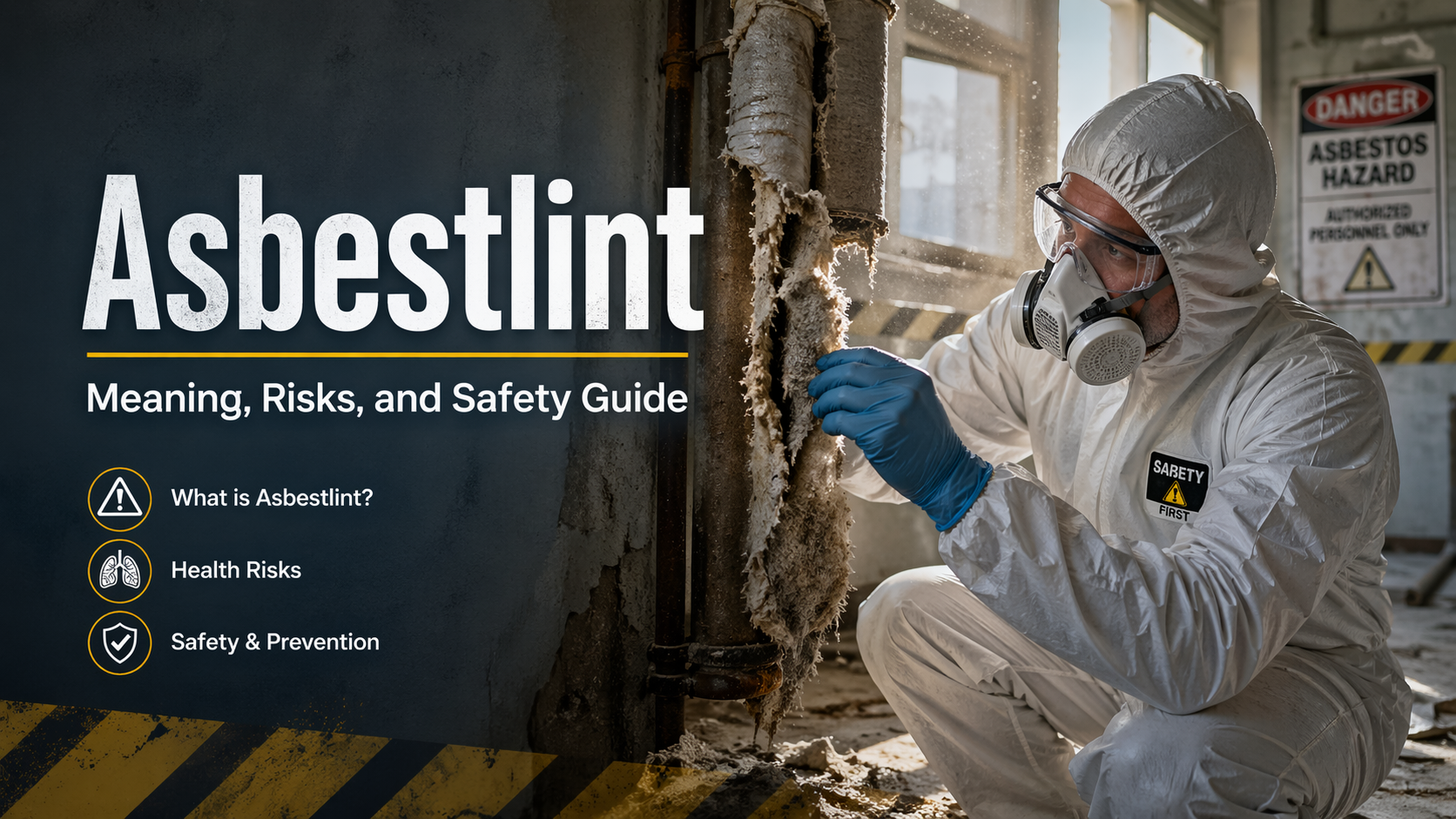
Asbestlint… sounds a bit technical, right? Maybe even harmless at first. But it’s not something you want to ignore — especially if you deal with old buildings, renovation work, or industrial spaces.
Let’s break it down in a simple, real-world way. No complicated jargon. Just what you actually need to know.
What Is Asbestlint?
Asbestlint is basically tiny, lint-like particles that contain asbestos fibers. These particles form when asbestos materials break down, get disturbed, or age over time.
It looks like dust… soft, floating, almost invisible. But inside? Dangerous fibers.
Short explanation:
- It’s not solid asbestos sheets or tiles
- It’s the dust form of asbestos
- And it spreads easily in the air
And here’s the scary part — once inhaled, these fibers can stay in your lungs for years.
Quick Overview Table
| Aspect | Details |
|---|---|
| Definition | Fine lint-like asbestos fibers |
| Source | Damaged or aging asbestos materials |
| Visibility | Mostly invisible airborne dust |
| Risk Level | Very high when inhaled |
| Common Locations | Old buildings, factories, insulation areas |
How Asbestlint Forms
This doesn’t just appear randomly. It forms over time… slowly… quietly.
When materials containing asbestos:
- Break down
- Get cut, drilled, or disturbed
- Age and crumble
They release microscopic fibers into the air.
These fibers then behave like lint — floating around, settling on surfaces, and becoming easy to inhale.
Where You Can Find Asbestlint
You might be surprised… it’s more common than people think.
Common places:
- Old houses (especially pre-1980 construction)
- Ceiling tiles and insulation
- Boiler rooms and pipelines
- Industrial factories
- Shipyards
- Abandoned buildings
And yeah… even schools and offices built decades ago can have it.
Why Asbestlint Is Dangerous
Let’s be honest — this is the main reason people talk about it.
Asbestlint becomes dangerous when inhaled. Those tiny fibers don’t break down in the body. They just stay there.
Major health risks:
- Asbestosis – lung scarring and breathing problems
- Lung cancer
- Mesothelioma – a rare but aggressive cancer
And the tricky part? Symptoms can take years… even decades… to appear.
Why It’s Worse Than Solid Asbestos
You might think asbestos itself is the main issue — but asbestlint can actually be more dangerous.
Why?
- It’s airborne
- You can’t easily see it
- It spreads quickly
- It enters lungs faster
Solid asbestos is risky when damaged. But asbestlint? It’s already in the dangerous form.
Types of Asbestlint (Simple Understanding)
There’s no official “types” like products, but practically, people refer to it in two ways:
1. Airborne Fibers (Most Dangerous)
- Floating dust particles
- Released from damaged materials
- Major health risk
2. Warning Tape (Confusing Term)
- Bright tape used in hazardous zones
- Doesn’t contain asbestos
- Just a safety indicator
So yeah… don’t confuse the two.
How to Identify Asbestlint
Here’s the truth — you usually can’t see it clearly.
But there are warning signs:
- Dust in old buildings that keeps returning
- Crumbling insulation or ceiling material
- Fibers around pipes or walls
- Renovation areas with old materials
Still… visual guessing isn’t enough.
Best method:
- Professional inspection
- Air quality testing
- Lab analysis
Safety Tips to Avoid Exposure
This part matters the most. Because prevention is everything.
Simple safety steps:
- Avoid disturbing old materials
- Don’t drill or cut unknown surfaces
- Use protective masks (PPE)
- Seal off risky areas
- Hire professionals for removal
And seriously… don’t try DIY removal. That’s where most exposure happens.
Safe Handling and Removal
Handling asbestlint isn’t a normal cleaning job.
Professionals use:
- Sealed containment zones
- Air filtration systems
- Protective suits
- Controlled disposal methods
Because once fibers spread… it’s hard to control.
Modern Alternatives to Asbestos
Good news — industries have moved on.
Safer materials now include:
- Fiberglass insulation
- Mineral wool
- Cellulose insulation
- Modern synthetic foams
These provide similar benefits without the health risks.
Common Mistakes People Make
Let’s keep this real — most exposure happens due to simple mistakes.
Big mistakes:
- Ignoring old building materials
- DIY renovation without checks
- Sweeping or vacuuming asbestos dust
- Not using protective gear
- Assuming “it’s just dust”
And yeah… that “just dust” mindset is risky.
Why Awareness Is Important
Many people don’t even know about asbestlint.
They know asbestos… but not this lint-like form.
Awareness helps:
- Prevent accidental exposure
- Improve workplace safety
- Protect families in old homes
- Reduce long-term health risks
And honestly… knowing this early can save lives.
Future of Asbestlint (And Asbestos)
Things are changing.
Many countries have:
- Banned asbestos use
- Introduced strict safety laws
- Promoted safer alternatives
But older buildings still carry the risk.
So the future isn’t just about banning — it’s about safe management and removal.
FAQs
Is asbestlint visible?
Not really. It’s microscopic and often invisible in air.
Can I remove it myself?
No. It’s unsafe. Always hire certified professionals.
Is every old building dangerous?
Not always… but it should be inspected before renovation.
How long does exposure take to cause harm?
Sometimes years or decades — which makes it more dangerous.
Final Thoughts
Asbestlint might sound like a small thing — just dust, right?
But it’s not normal dust. It’s a hidden hazard. Quiet. Airborne. Long-lasting.
And the biggest mistake people make? Ignoring it.
So if you’re dealing with old buildings, renovation work, or industrial spaces… take it seriously. Check first. Act safely. Don’t guess.
Because with something like this… a small precaution today can prevent a big problem later.